Bread is Bread
Why reductionism starves reality

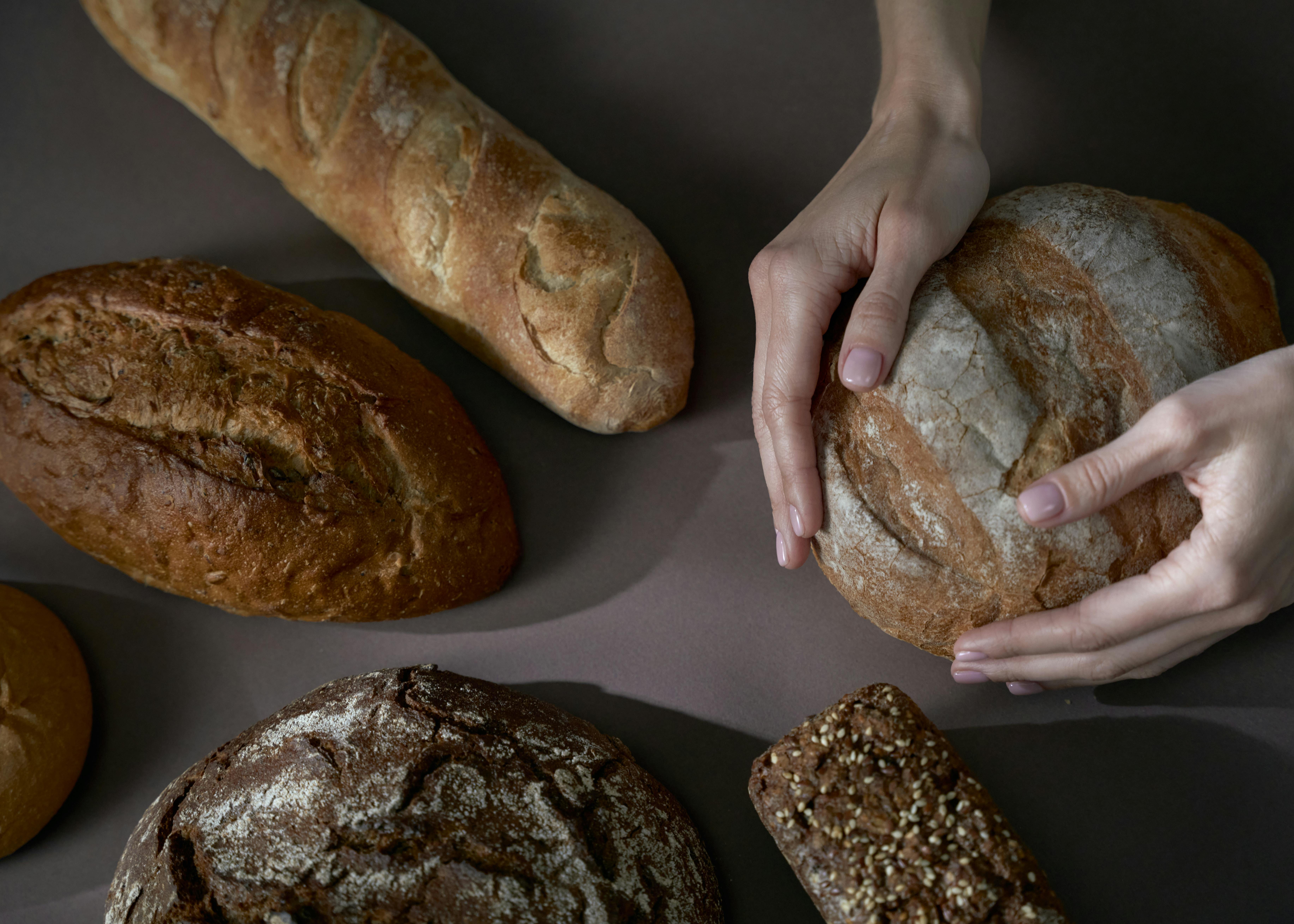
The world gives more than explanation can keep.
Last year, the city I live in was named one of the best food cities in America. I love it here. There are brunch spots everywhere, huge plates, vegan restaurants, barbecue joints, coffee shops, bakeries. The whole city swells with aromas infiltrating my senses. And sometimes, when I’m walking past a bakery, the smell of warm crust, yeast, and butter ambushes me.
Bread is bread.
I take a bite of the sourdough, sinking my teeth into the chewy crust. The tender, open crumb gives way. A small piece sticks to my chin.
“Who invented bread?” I wonder. “A damn genius, that’s who.”
I gaze at the slice in my hand as if it has an inner life, as if it has preferences, a favorite movie, a record collection. As if it might miss someone who never came back.
As I swallow my last bite, I hear a group of people at a nearby table talking about tradition and boomers. Then one of them lands the whole thing with a shrug: “It’s all just made up.” Then I spot a copy of TIME magazine. The cover asks whether prayer is real or just a functional placebo, with a neuroscientist offering their view.
That’s the world now: bread is just flour, prayer is just placebo, joy is just brain chemistry. We’ve trained ourselves to slash reality until nothing remains, then call emptiness truth.
But slashing runs into a problem: bread doesn’t care what you call it.
Picture a slice of bread in your hand. No theories, no diagrams, no abstractions. Just bread and hand, one in contact with the other. You feel its warmth, its crust, its weight, its roughness.
A physicalist would say that what’s happening is a set of material interactions: pressure, texture, heat transfer, starch, protein, and the measurable properties of matter in contact. In that sense, they would say the event has been explained.
An idealist would deny that the bread exists independently of mind, and would say that what you are really holding is a perceptual representation, or a pattern of excitation appearing in consciousness. They too would say the event has been explained.
But neither explanation gives you the whole bread. The bread exceeds the moment of contact, even as it is given there. In touching it, you encounter only certain features, its warmth, its crust, its texture, not the full reality of the thing itself. The bread is not just flour, water, and yeast. These ingredients are necessary, but they do not exhaust what bread is.
Of course, my access to the bread is always partial. But that does not mean the bread is reduced to what appears to me, any more than seeing a sunset reduces the sun to a feeling. What I came to see is that a thing is never exhausted by the way we use it, describe it, or reduce it. This is not a rejection of science. It is a question about whether scientific description exhausts what a thing is.
This way of thinking is connected to Object-Oriented Ontology, or OOO, especially in Graham Harman’s work. What matters to me is not the label, but the relief of seeing the world as more than what appears to me. It feels less like adopting a theory and more like recognizing a truth I had been circling for years. It gives me permission to let the world be real: objects, people, bread, fire, not as illusions or private experiences, but as things in their own right. It also leaves room for mystery, because every object withdraws from full access. That hiddenness is not something added on later; it is built into the object itself.
To be clear, the example of a hand holding a piece of bread is not a lesson in physiology disguised as philosophy. It is an ontological image meant to show that no object is exhausted by the way it enters into relation, even in an event as ordinary as touch. Whether we describe the interaction in terms of nerve signals and pressure gradients, or in terms of felt texture and warmth, the relation only ever engages a limited range of what the bread and the hand are. What withdraws is not one description from another, but the object itself from the relation that only partially discloses it.
Bread, the magazine, and my own joy in encountering the world all remind me of the same thing: reality is never exhausted by our explanations of it. Prayer isn’t reducible to placebo because bread isn’t just flour. Joy isn’t brain chemistry. Tradition is the accumulation of real encounters, generations meeting the world on its own terms. Science may trace neural correlates, but it cannot fully contain the reality of what meets us.
Reductionism starves because it demands exhaustion. Either we explain it all or dismiss it. But objects resist. They give presence and withhold essence. That is freedom for science to measure ash, for poetry to praise loaves, and for faith to trace Logos through both.
Next time you smell bread, pause. Feel its insistence. Let the fact of it settle. Reality isn’t made up. It is realer than our slashing allows.
Walk slower. Bite deeper into sourdough. Wonder more. The world of bread, prayer, and people meets you in its own reality. Let it.
Occam Laughs explores realism, mystery, and the irreducible depth of the world through philosophy, theology, art, and experience. More reflections and audio pieces can be found on Instagram: @occamlaughs